

A biological age result answers one question: how old does your body look compared with your birthday. It does not answer the next one: why?
Which systems are driving that number up or down? Is it metabolic, inflammatory, immune, or something else? Without that, you are left with a score and a lot of guessing about what to change.
Multi-omics clocks try to close that gap. Instead of treating aging as a single average, they pull in signals across layers of biology (genomics, epigenomics, proteomics, metabolomics, and related clinical markers) and ask which patterns track with health outcomes, not only with chronological age. OMICmAge is one of the better-known examples of that approach.
It was developed with collaborators at Harvard and built so that DNA methylation data can stand in for a much wider set of measurements that would normally be expensive to run directly.
In practice, that means a richer read on what is contributing to your biological age, which is more useful if you plan to intervene and retest.
In the interview below, TruDiagnostic co-founder Ryan Smith walks through what “multi-omic” actually means, how OMICmAge was built, and what it can (and cannot) tell you about why you are aging.
This page is an explainer, not a product review. For the full TruDiagnostic TruHealth kit, reports, and how I use the data, see the main TruDiagnostic review.
This interview was conducted in October 2023 over Zoom and is an audio transcript with minor edits for clarity, brevity and correctness.
What OMICmAge is
A Longer Life (ALL):

Ryan, thanks so much for coming back to join us again on A Longer Life, we are really excited to talk to you about some updates that TruDiagnostic has to their biological age estimates.
The new algorithm is called “OMICmAge” which you are pronouncing as “OMIC Age”. This algorithm is multi “omic” in nature and has demonstrated some very impressive results particularly in predictive capability for mortality and health outcomes.
We are going to break it down - let's start first with what does it mean to be “multi-omic”? And what is an “omic”?
Ryan Smith (RS):
Generally, we would call these “omics” different levels of measurement that are trying to replicate what happens naturally in our body from a stepwise process.
This starts with things like genomics, everyone's familiar with the genome. That would go to the epigenome into things like transcriptomics, metabolomics, and proteomics. These are different ways to measure physical things which are happening in the body.
Bringing together data from all of your “omes” provides a more comprehensive picture of your biological ageand why you are aging.
The reason that this is important for aging, is because aging is ridiculously complex. Our approach with the OMIC clock has been to consolidate information from the entire system and taking a more complete look at the full picture of biological aging.
ALL: Just to make sure we get this really clear, you mentioned a few different types of “omes”. First genome and epigenome, our audience is pretty familiar with those.
You probably start to lose some readers when you mentioned proteome or metabolome. Why don't you briefly explain what either of those are just as examples?
How multi-omics clocks differ from simpler age scores
RS: In the molecular biology world, we have being transcribed by the ribosome, which then create the proteins or peptides that make up the infrastructure of the body. That's what we call proteomics.
Metabolomics is the study of all the small molecules or metabolites within the body. One example of important metabolites are our hormones or neurotransmitters.
Even if you might not be familiar with proteomics and metabolomics, you are certainly familiar with the spectrum of biomarkers that influence disease progression or performance.
ALL: This involvement of these different “omes”/”omics” provides a lot more information about what's happening in the body as it is aging. Including this additional information produces a great result - the predictive capability for both mortality and health outcomes.
Can you explain the significance of this development?
 |
OMICmAge can predict health outcomes, not just mortality

RS: One of the big things that we have shown with this new aging clock is that it is really the most predictive of every type of age related outcome.
More generally, if you are accelerated with this biological clock (biological age > chronological age), you are going to be at more risk of all negative health outcomes than you would be if you were accelerated with the same amount (e.g. +1 year) than any other clock (i.e. any other biological age test).
Approach to integrate multiple layers of aging biology: Multi-Omics
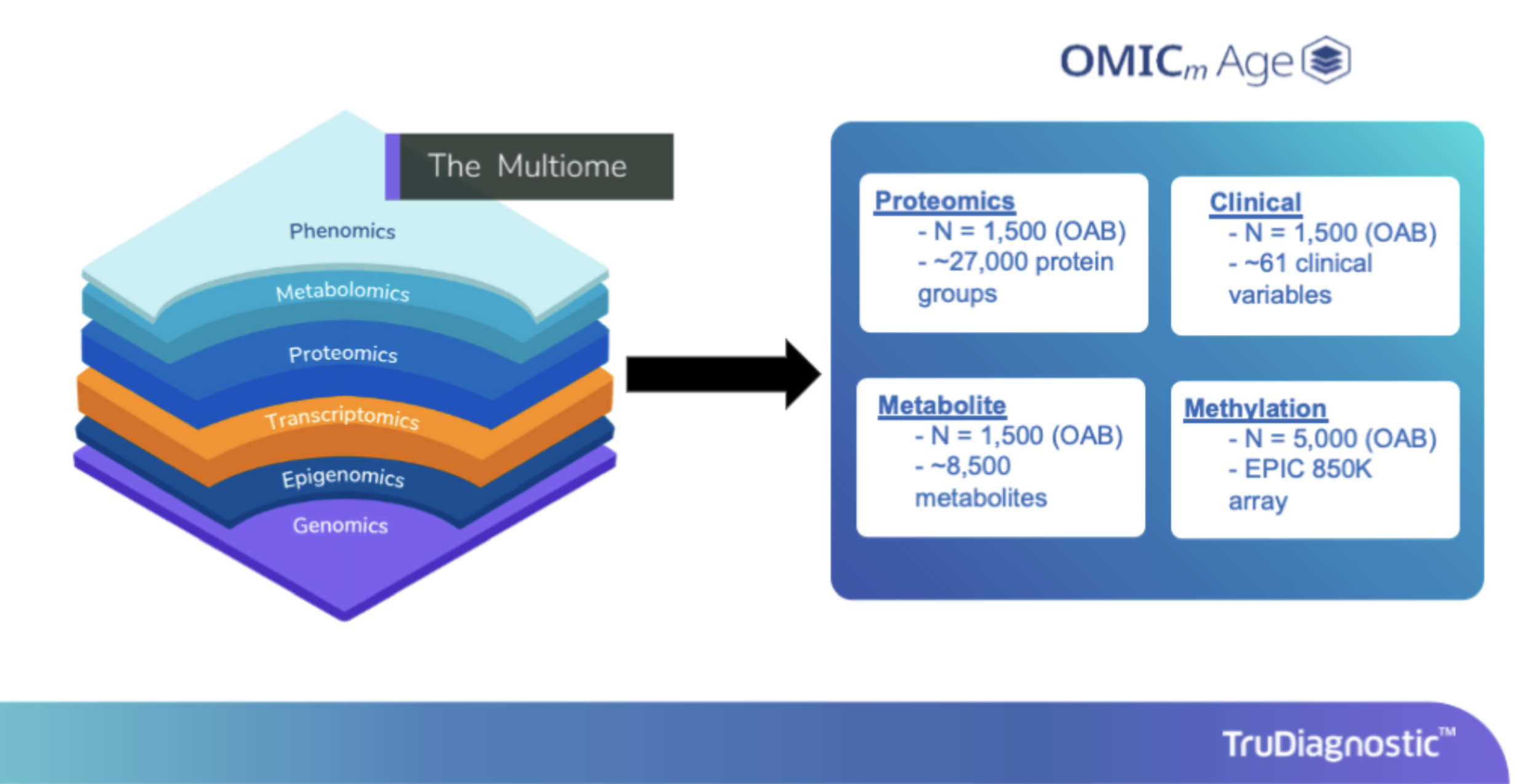
Pulling together so many sources of information, allows the new OMICmAge algorithm to be incredibly predictive of both mortality (death) and disease outcomes (what age related illnesses you are most likely to get).
ALL: The last few sentences that you described are really exciting, and something we will converge in on after a few more questions here. One thing we want to go back to, in addition to this “omic” part of the clock name - we also have an “m” in there, which stands for methylation.
This part of the background development on the new clock comes from a broader collaboration, that is actually really impressive. You have pulled in some of the best researchers on this topic in the world.
We would like to just briefly hear from you about that collaboration.
The research collaboration behind OMICmAge
RS: Proving outcomes about longevity and disease requires following up patients for 40 or 50 years to see what is happening to them. Are they developing disease? Are they dying? When are they dying and what are they dying of?
All that information is incredibly important, but also incredibly difficult to get because really, you had to start a lot of these studies or these data collections a long time ago. In order to do that type of analysis, which we know we needed, we had to work with a biobank.
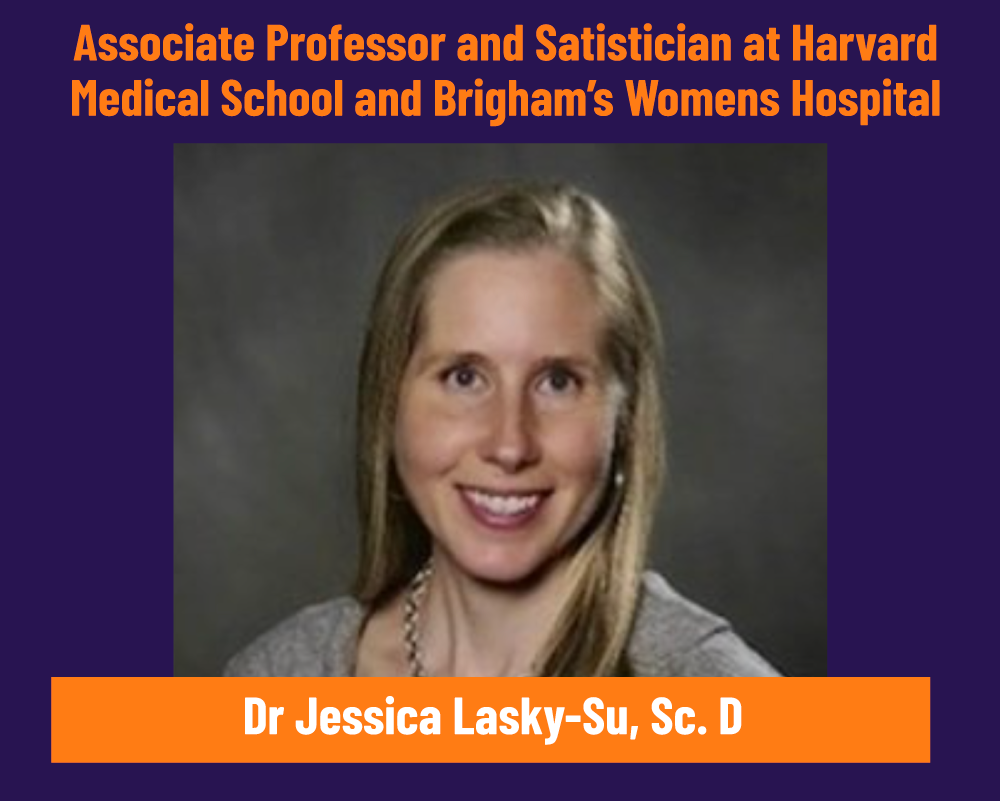
TruDiagnostic’s dramatic leap ahead of the competition on biological age analyses has been made possible by collaboration with world class researchers and datasets.
Dr Jessica Lasky-Su ticks both of these boxes - an Associate Professor at Harvard Medical School with access to the incredible biobank data at Brigham’s Womens Hospital.
We chose to work with Brigham Women's Hospital and researchers at Harvard. Dr. Jessica Lasky, was our main collaborator on this, along with her postdoctoral student (Dr. Ching Win).
We were able to get samples that had been taken 50 to 40 years ago, and then do our analysis on those samples.
ALL: An important part of which was methylation data, the “m” in the OMICmAge clock?
RS: To your point about methylation data, it actually saves greatly on costs. Biological aging is very complex and to measure all of those different “omes” in individual aging it is prohibitively expensive.
Of the 5000 patients in our cohort, costs for testing were $9,000 to $10,000 (USD), to quantify all of those different things at every single level. It's way too expensive.
We knew we had to consolidate data from all those ‘omics’ into a single test which can be done at a much lower price and at scale.
With DNA methylation we can actually predict the “omic” data. Meaning we can quantify things that previously you could only do through advanced proteomics and metabolomics.
How methylation proxies other biological layers
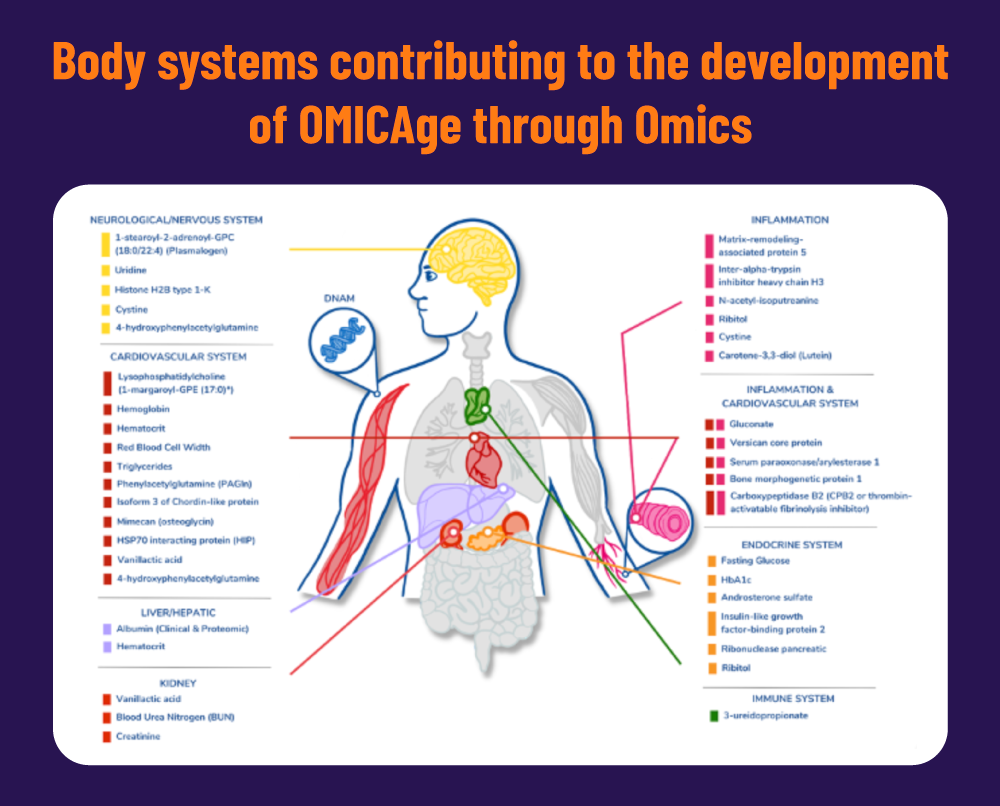
Through measuring your DNA methylation (epigenome), TruDiagnostic can now reveal how different systems in your body are contributing to your biological age.
In short, the “why” behind why you as an individual are aging is starting to be revealed.
ALL: Let us jump in there and just break down some really important parts of what you just said.
The omic data you were describing at the opening of the interview is a rich source of information from all different systems in the body. However, it is very expensive to measure those things directly, but they are very indicative of aging outcomes. So we want that information.
Now, what TruDiagnostic and your research collaborators have made possible, is using the DNA methylation data to make estimates or predictions of omic information that is driving aging - this is a really big advancement.
RS: That is exactly it. We are starting to understand the why of biological aging by incorporating more detail about the things that are driving the process. In our study we used methylation to predict other values.
Right now we can use methylation to predict things you would get at a typical doctor's visit, things like your HbA1c for blood sugar management, your fasting insulin, fasting glucose, or even your creatinine.
Now we can use DNA methylation to output the things that previously were things you had to go get a blood draw at your physician's office to actually quantify.
What the “why” looks like in a report

An excerpt from a sample report from TruDiagnostic. Your DNA methylation data can now reveal the status of key blood markers and how they are contributing to your biological age.
ALL: To that point, this ability to use the methylation data to predict different biomarkers and provide information about the “why” behind individual aging - there are new reports that are going to be accessible to TruDiagnostic customers on the 12th of October (2023).
Moving ahead, OMICmAge is going to become your primary biological age clock and this information about these biomarkers will be in the TruDiagnostic reports made available to your customers.
You have offered to show us a sample report with some of this information. Let's pull that up now and walk through some specifics of what information we are able to predict about different OMIC areas of the body with his DNA methylation data.
RS: This is a very robust report, I won't take you through everything. We have about 10 clinical biomarkers, 12 different proteins and 12 different metabolites which we can connect to impacting your epigenetic age.
For instance, we might give you your haemoglobin or your creatinine results, much like you might see on a blood based lab. The real important part here is that we can also tell you how it is contributing to either helping or hurting your biological aging process.
For instance, probably the most protective factor in this particular individual (see image) is serum albumin. Serum albumin is a protein which can bind a lot of other things in your body and for people who are very interested in aging, this is one of those factors, which tends to decrease in decline with age.
We also know that red cell distribution width (RDW) and HbA1c are probably the factors in this particular patient, which are driving their aging process the most.

Another excerpt from a TruDiagnostic OMIC Age test report. Key blood markers which are contributing to an individual’s aging. Here, low blood Albumin is a key target for intervention. Low levels are making this individual biologically older than the would otherwise be. Red cell distribution width (RDW) on the other hand, is looking healthy.
Why I am aging? Then, what do I do about it?
ALL: This seems to be directly related to the term precision aging - we have heard it in a few other places.
That concept is broadly representing what you just said - namely personalised outcomes and understanding aging for the individual.
Carotenediol also goes into the name Lutein, which people already often take as a supplement.
Through the work on the OMICmAge clock, its importance in aging has been even further emphasised. It is a key metabolite for biological age.
You have shown some examples there. Let's talk in a little bit more detail about what this means for an individual's longevity strategy for their own effort to stay helpful and youthful for longer.
You mentioned that we can use that report to find targeted opportunities for improving biological age. Could you give an example from this report that reveals a marker that is very important for that individual and what action would they take to improve their biological age?
RS: I think that one great example is a metabolite. These are really good examples because a lot of the metabolites in your body are based off of things you eat or supplement. Carotenediol also goes into the name Lutein, which people already often take as a supplement. People might be familiar with it for some of its eye health benefits, which is probably most common for.
Lutein and other Carotenoids are a pillar of longevity. With the test kits from TruDiagnostic, you can understand how your diet (and supplement) strategy are working (or aren’t working) to improve your biological age.
We included Lutein in our OMIC Age prediction through algorithmic selection. We find that if we wanted to predict death accurately, that Lutein (carotenediol) was one of those metabolites which was highly influential in terms of predicting longevity as an outcome.
This is a really good case example because we also know that if you supplement with carotenoids, you start eating more things like leafy green vegetables like spinach, or kale or, or carrots or yellow peppers, you can actually increase that carotenediol level within your plasma.
And that will actually change our biological age prediction through changes in DNA methylation. That will then take your overall biological age down
Using a richer clock for self-experiments
ALL: What is the sensitivity in or I should say, responsiveness of the algorithm to change that you just mentioned? How long do you think a user would have to run that self experiment? They are going to measure with a TruDiagnostic test, they are going to make a dietary or supplement change, maybe both and test again. What does that testing protocol look like?
RS: That is a really good question, and to be honest with you, we are not quite sure yet.
I think quite frankly, it might be different for many of those different predictors. For instance, your HbA1c is a really good example, because it behaves a little bit like methylation biomarkers behave, which is sort of a three month running average.
Traditionally, we only recommend testing every six months. But we've seen even some of these epigenetic biomarkers change effectively, in as little as eight weeks.
ALL: So we are still looking at six months as the approximate timeline for self experimentation, that could change because there is a lot here that is new and unknown.
Just come back to that example, if somebody wanted to make a dietary shift or dietary change, or supplementation change, and then measure before and after, we are going to still go with the guidance of approximately six months at this time for measuring before and after. Do you agree with that summarization?
RS: I think on a casual basis that is what I would recommend. In shorter periods of time, you might have some transient changes that don't reflect the true biological aging changes and so the longer period of time that you are doing intervention, the more confident we can be that the result is correct, and that you are moving in the right direction.
What these clocks are still learning
ALL: One other thing I wanted to explore before we close off, Ryan - You have actually been discovering new influential factors in aging through this research that were not previously known - please give us an example?
RS: As our ability to predict other things with epigenetic methylation become even more powerful we are going to have even more insights. The metabolite ribitol is one of those examples.
This is a metabolite that is influential in creating the baseline molecules we use to regulate DNA, RNA, or even some of those sugar based pathways.
If you look this up in the literature, you find only two examples about this in PubMed. Although there were very few references to it, we are seeing that it seems to be a very good predictor of mortality.
ALL: That's really fascinating Ryan, and we have walked through a great update of what is coming out with this new clock. Soon, we are going to be able to look at some examples from our Founder Nick’s results after the OMIC Age clock comes out.
In closing, we just would like to say that this is really exciting and congratulations to TruDiagnostic and your collaborators for bringing such an advancement to the field!
RS: It is always a pleasure to talk with A Longer Life. We always have some elevated conversations, which probably yield a lot of questions. If anyone has any questions, feel free to reach out to us directly at TruDiagnostic.












FDA & TGA DISCLAIMER
This information is intended for educational purposes only and is not meant to substitute for medical care or to prescribe treatment for any specific health condition. These blog posts are not intended to diagnose, treat, cure or prevent any disease, and only may become actionable through consultation with a medical professional.